
Capability
Engineering
Support.
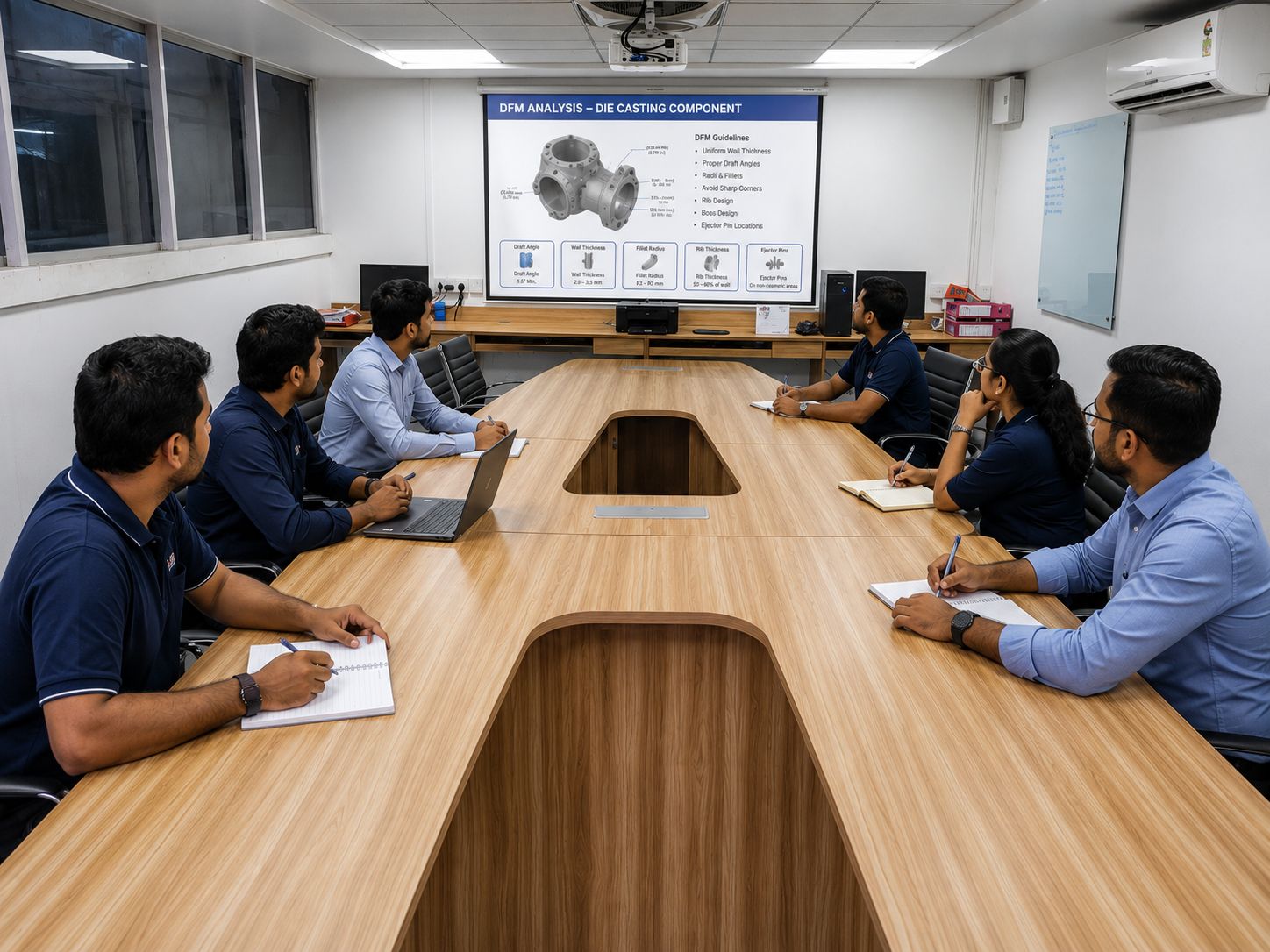
DFM analysis, alloy selection guidance, design review, and prototype samples — before drawings are frozen and tooling is cut. Early involvement that reduces ECNs and shortens time-to-production.
Overview
Engineering Support
Most component problems in aluminium die casting originate in decisions made before the die is cut — wall thickness that creates porosity, draft angles that prevent clean ejection, gate locations that produce cold shuts. SAPL's engineering support is designed to catch these issues at the design stage, where corrections cost nothing.
We offer DFM analysis on customer CAD models — a written review identifying potential manufacturability issues with specific recommendations for resolving them. For new designs, we can advise on alloy selection, wall thickness optimisation, parting line strategy, and design features that reduce machining complexity downstream.
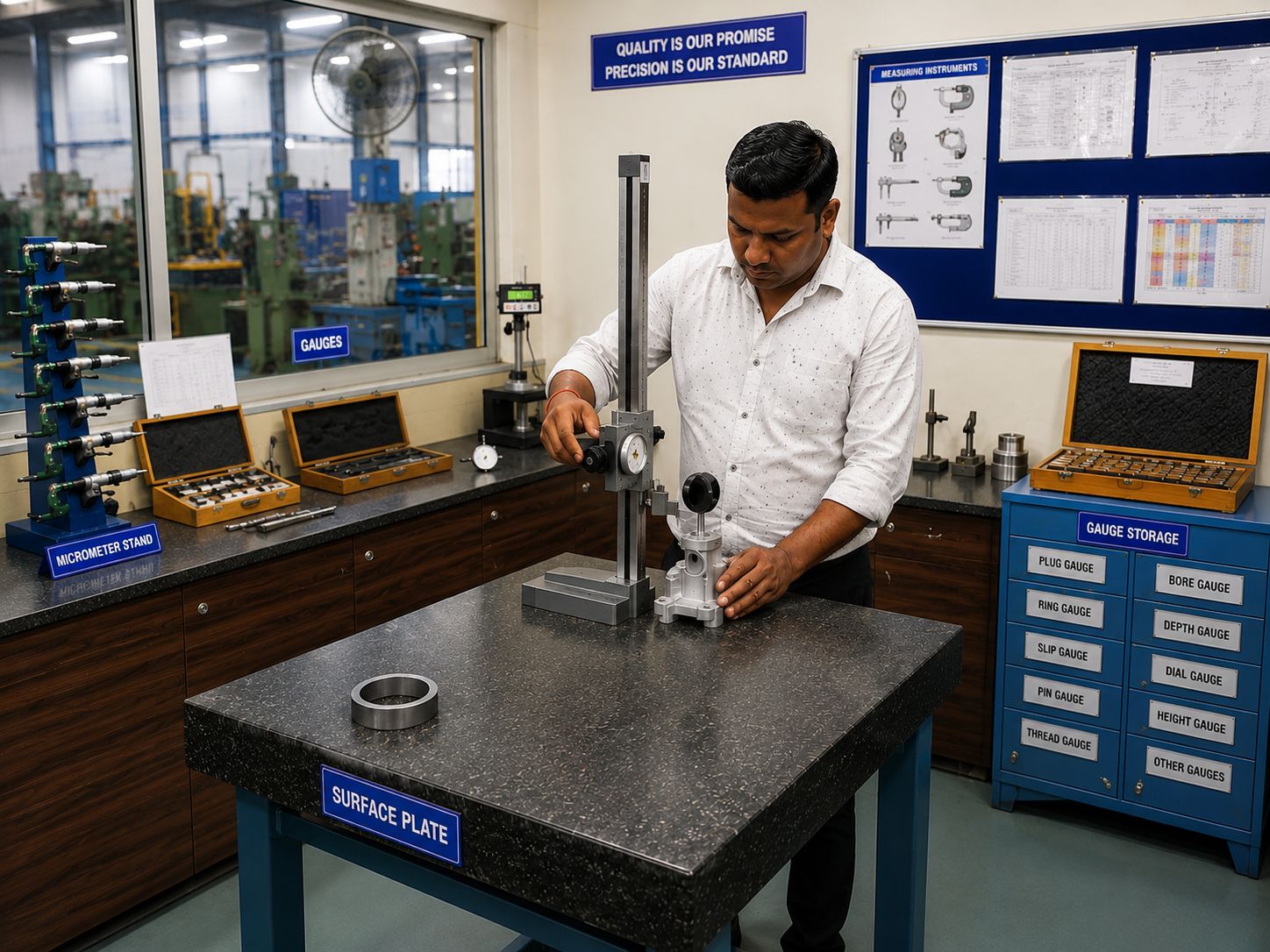
For programmes where prototype samples are needed before tooling investment, we can produce T0 samples from tooled dies within 6–8 weeks of drawing approval. These can be used for form/fit/function testing, customer sign-off, or regulatory submission. Full dimensional reports and material certificates are provided with samples.
Process
How it works
Drawing Submission
Customer shares CAD model or 2D drawing (STEP, IGES, DXF, PDF, SolidWorks). No NDA required for preliminary DFM feedback.
DFM Analysis
SAPL engineering team reviews: wall thickness vs process minimum, draft angles, parting line feasibility, gate and runner options, machining implications, and cost drivers.
DFM Report
Written DFM report issued with marked-up drawing. Identifies issues, ranks by severity, and provides specific recommendations. Issued within 72 hours for standard complexity.
Design Iteration
Customer revises design based on DFM feedback. SAPL reviews revised drawing. One or two iterations typically resolve all critical issues before tooling begins.
Prototype Samples
Tooled die produces T0 prototype samples. Full dimensional report and OES material certificate provided. Samples available for form/fit/function testing or customer sign-off.
Production Transition
T1/T2 corrections close dimensional deviations. PPAP compiled. Series production released on completion of tool qualification.
Applications
Industries and use cases
Components produced via this process are supplied to OEMs and Tier-1 manufacturers across these sectors.
New Product Introduction
Any new aluminium component programme where engineering consultation at the design stage can prevent costly rework
Design Transfer
Components transferring from another manufacturer — DFM review identifies whether existing design can be cast to specification at SAPL
Value Engineering
Existing components reviewed for wall thickness reduction, part consolidation, or process simplification to reduce unit cost
Export Programmes
European OEMs developing new programmes want DFM-cleared designs before committing to tooling investment
Related
Connected capabilities
Tool Development
Die design, DFM analysis, mould flow simulation, and in-house tool qualification — from T0 trials to PPAP sign-off.
View capability →High Pressure Die Casting
Five fully-automatic HPDC machines from 180T to 450T.
View capability →Contract Manufacturing
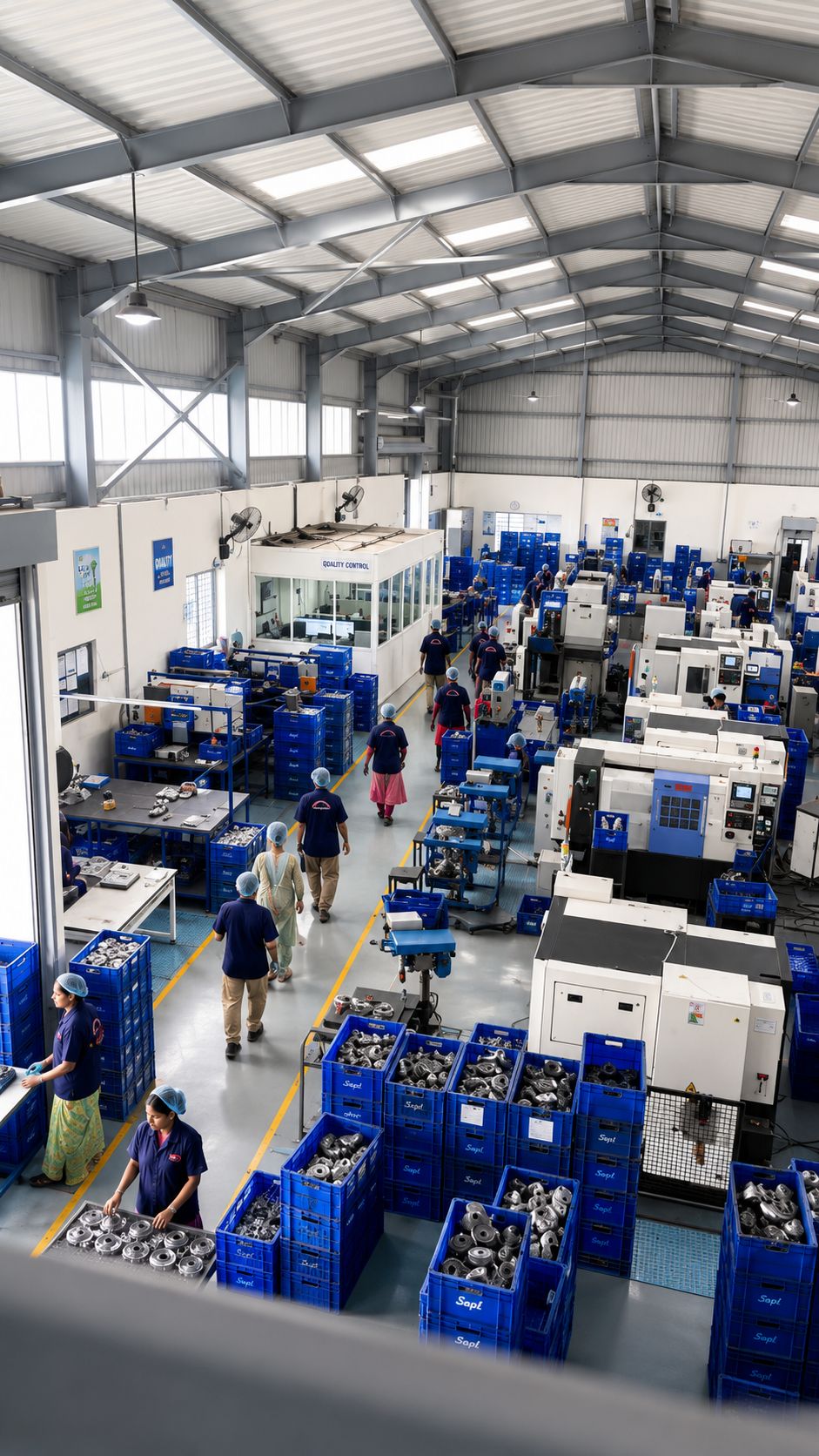
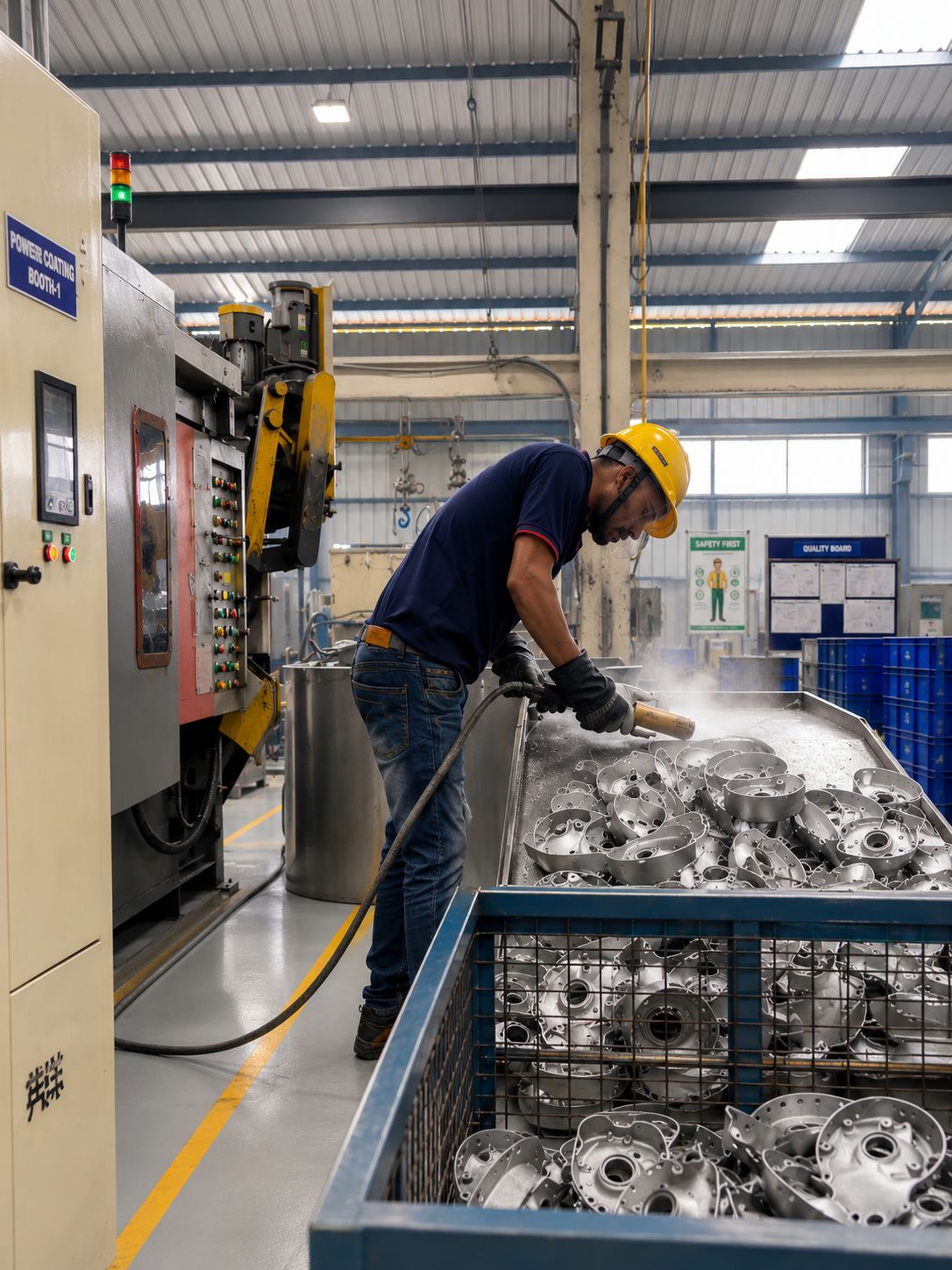
From raw casting to finished, inspected, and packed component — under one roof, one management team, one Certificate of Conformance.
View capability →Get Started
Discuss your component with our engineering team
Share your drawings — STEP, IGES, DXF, PDF, or SolidWorks. We'll review manufacturability, recommend the right process and alloy, and respond with a detailed technical and commercial assessment within 72 hours.