
Capability
In-House
Powder Coating.
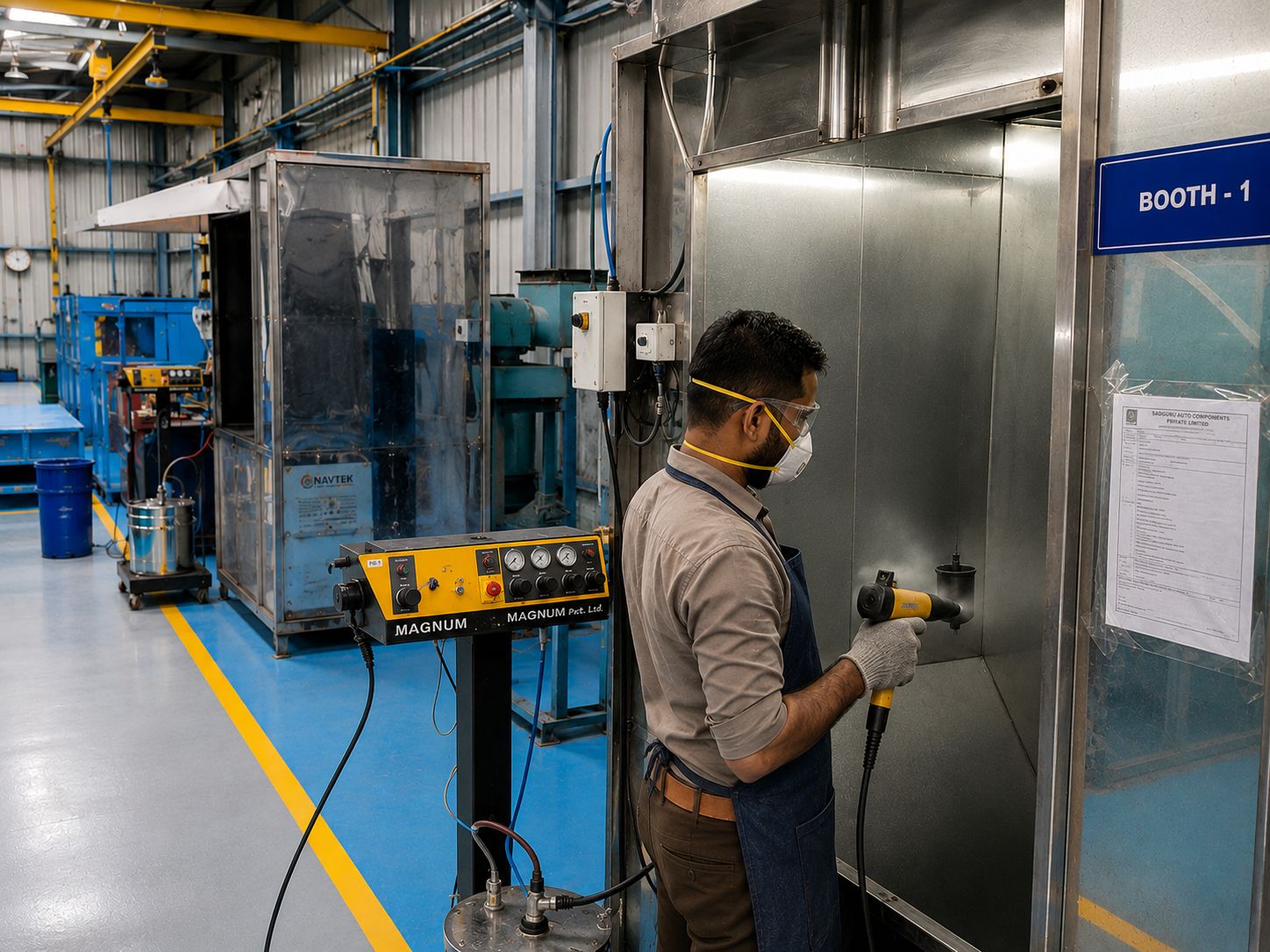
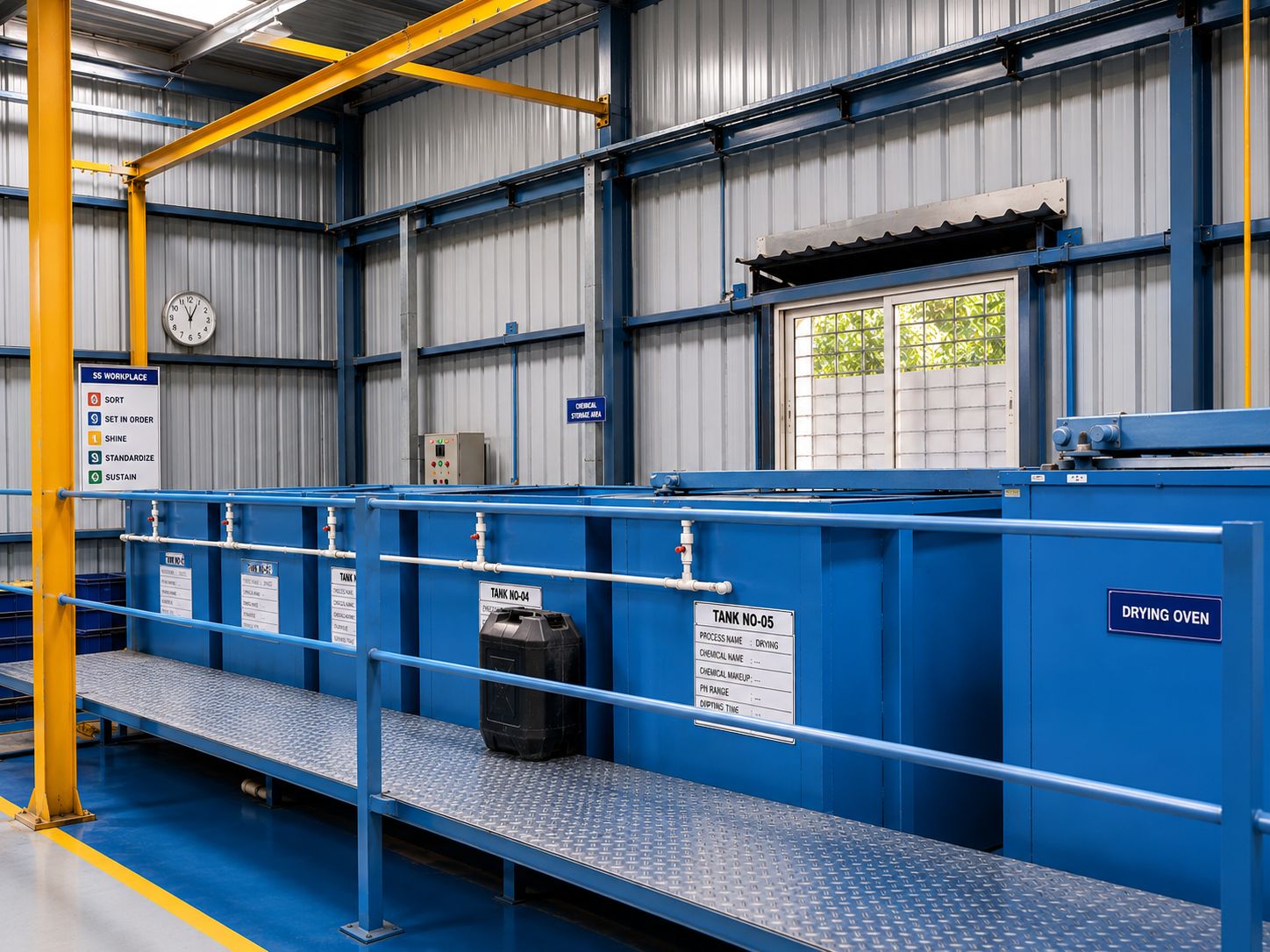
5-tank nano-ceramic pre-treatment, two dedicated coating booths, 100% Dry Film Thickness inspection on every part. Full corrosion and adhesion performance — in-house, under our quality system.
Overview
Powder Coating
Powder coating is the final process stage for components requiring a durable, decorative, or corrosion-resistant surface finish. SAPL operates in-house powder coating with a 5-tank nano-ceramic pre-treatment line — the same pre-treatment technology used by leading automotive and appliance OEMs.
Nano-ceramic pre-treatment converts the aluminium surface to a chemically bonded ceramic layer before coating is applied. This produces significantly better adhesion and corrosion resistance than conventional phosphate or chromate pre-treatments, without the regulatory concerns associated with hexavalent chromium.
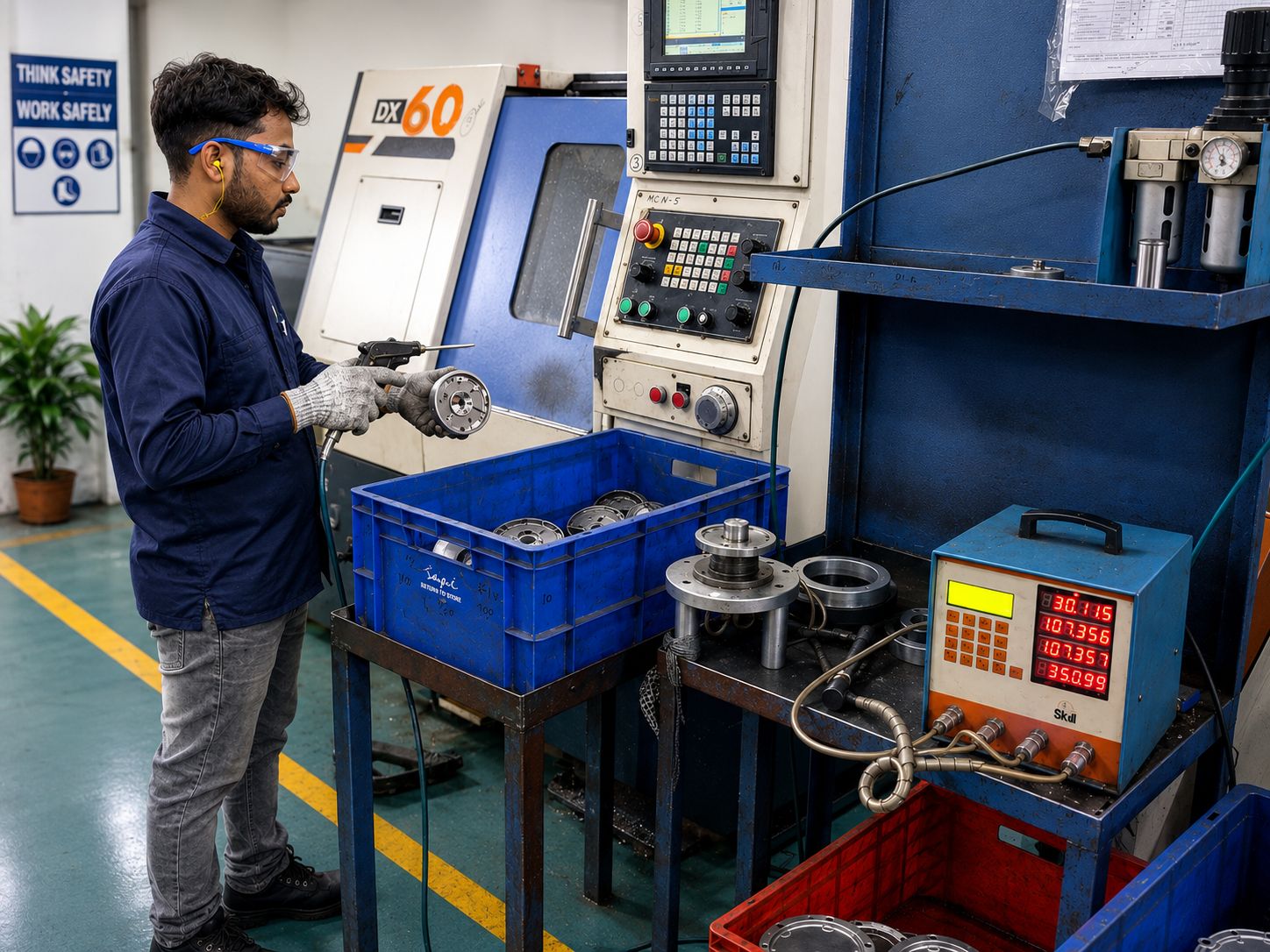
Every coated component undergoes 100% Dry Film Thickness (DFT) inspection with an Elcometer digital gauge. Cross-cut adhesion tests per ISO 2409 are conducted on each production batch. Cure oven temperatures and dwell times are logged per batch for full process traceability.
Process
How it works
Hot Degreasing
Components immersed in heated alkaline degreasing solution. Removes machining oils, coolants, and surface contamination from casting and machining.
Rinse
Cold water rinse to remove degreasing solution residue before chemical conversion.
Nano-Ceramic Conversion
Components treated in nano-ceramic bath. A chemically bonded ceramic conversion layer forms on the aluminium surface — significantly improving coating adhesion and corrosion resistance.
Passivation & Final Rinse
Passivation treatment stabilises the conversion layer. Final deionised water rinse removes all chemical residue.
Powder Application
Electrostatically charged powder applied in dedicated booth. Uniform deposition on all surfaces including recesses. Colour matched to customer RAL specification.
Curing & Inspection
Oven cure at 180–200°C for 20 minutes. 100% DFT inspection after cooling. Cross-cut adhesion test per batch. Visual inspection for orange peel, drips, or missed coverage.
Applications
Industries and use cases
Components produced via this process are supplied to OEMs and Tier-1 manufacturers across these sectors.
Consumer Appliances
Ceiling fan motor covers and housings — decorative colour matching, scratch resistance
HVAC & Air Movement
Outdoor fan components, blower housings — corrosion and UV resistance
Agriculture & Off-Highway
Tractor and implement components — heavy-duty corrosion protection
Electrical
Enclosure bodies and junction boxes — dielectric properties, colour coding
Industrial Equipment
Gearbox housings and structural components — oil and chemical resistance
Related
Connected capabilities
CNC & VMC Machining
Over 20 CNC turning centres and Vertical Machining Centres — including 4th-axis VMC for complex geometries.
View capability →Contract Manufacturing
From raw casting to finished, inspected, and packed component — under one roof, one management team, one Certificate of Conformance.
View capability →High Pressure Die Casting
Five fully-automatic HPDC machines from 180T to 450T.
View capability →Get Started
Discuss your component with our engineering team
Share your drawings — STEP, IGES, DXF, PDF, or SolidWorks. We'll review manufacturability, recommend the right process and alloy, and respond with a detailed technical and commercial assessment within 72 hours.