
Industry
Industrial
Automation.
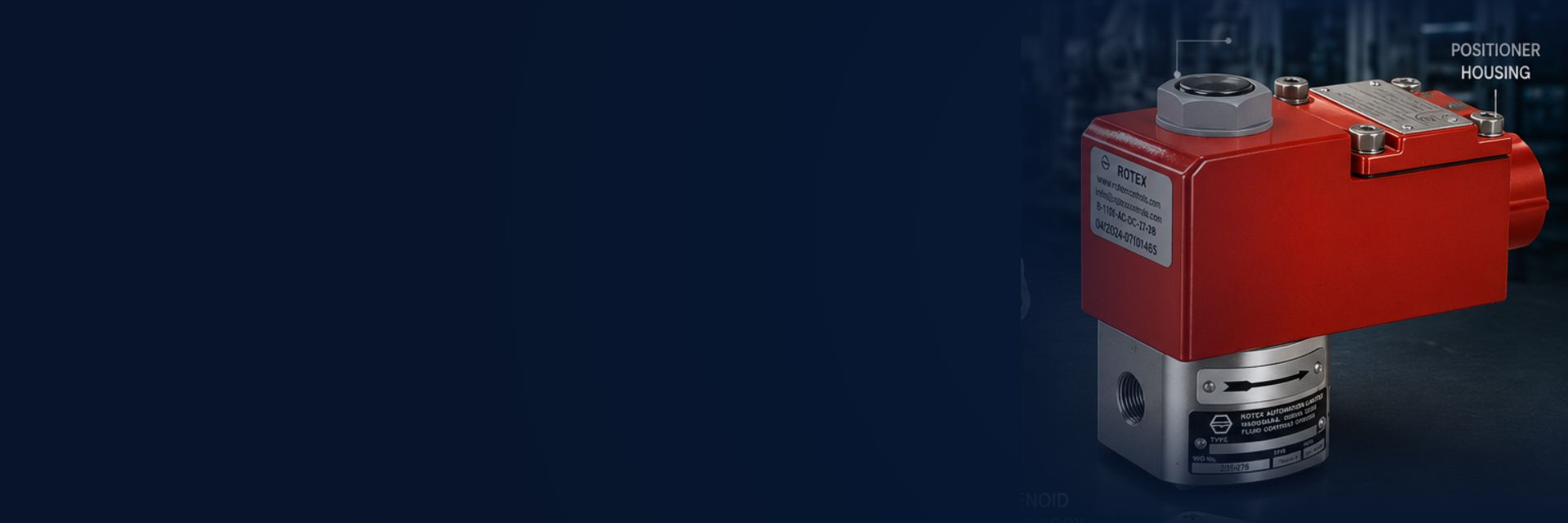
Actuator housings, solenoid bodies, structural brackets, and precision castings for automation and robotics OEMs. Tight geometric tolerances, predictable mechanical properties, and rapid response to engineering changes.
Sector Overview
Industrial Automation
Industrial automation components often have tighter geometric tolerances than standard industrial castings — concentricity, perpendicularity, and true position are frequently specified alongside linear dimensional tolerances. The repeatability of CNC machining on a stable aluminium casting is the primary reason aluminium HPDC is preferred over other casting processes for automation applications.
SAPL's machining centre runs over 20 CNC turning centres and VMC machines, including 4th-axis VMC for components requiring complex surface machining in a single setup. For actuator housings and solenoid bodies where concentricity between bore and OD is critical, turning in a single operation eliminates the error that would otherwise accumulate from two-setup machining.
Automation programmes often involve more frequent engineering changes than high-volume consumer programmes — functional prototyping reveals integration issues that require geometry updates. SAPL's in-house tool development capability (die modifications, EDM rework) and rapid re-sampling process reduce the time between ECN and revised parts.
What OEMs Require
Understanding your requirements
These are the recurring requirements SAPL sees from OEMs and procurement teams in this sector — and how our process and quality system addresses them.
Geometric tolerances — concentricity and perpendicularity
Automation components frequently specify GD&T tolerances beyond linear dimensions. SAPL measures concentricity, perpendicularity, and true position by CMM and reports against customer drawing callouts.
Single-setup machining for complex geometry
4th-axis VMC capability allows complex surfaces and intersecting bore features to be machined in a single setup — eliminating datum transfer errors that degrade concentricity in two-setup processes.
Fast ECN response
Engineering changes are common in automation programme development. Die modification, revised programming, and re-sampling can be completed faster than in multi-supplier supply chains. SAPL handles ECNs within its own facility.
Complete traceability on precision components
Automation applications increasingly require component-level traceability. SAPL provides batch-level records covering alloy chemistry, machining process, and inspection results, retained for 7 years.
Capabilities
Processes that serve this sector
These capabilities are most relevant to Industrial Automation component programmes.
High Pressure Die Casting
Five fully-automatic HPDC machines from 180T to 450T.
CNC & VMC Machining
Over 20 CNC turning centres and Vertical Machining Centres — including 4th-axis VMC for complex geometries.
Engineering Support
DFM analysis, alloy selection guidance, design review, and prototype samples — before drawings are frozen and tooling is cut.
Products
Components we supply to this sector
Sample components SAPL produces for Industrial Automation OEMs. Each product page includes full specifications, alloy options, and process details.
Get Started
Sourcing Industrial Automation components?
Share your drawings — STEP, IGES, DXF, or PDF. We'll review manufacturability, confirm the right process and alloy, and respond with a technical and commercial assessment within 72 hours.